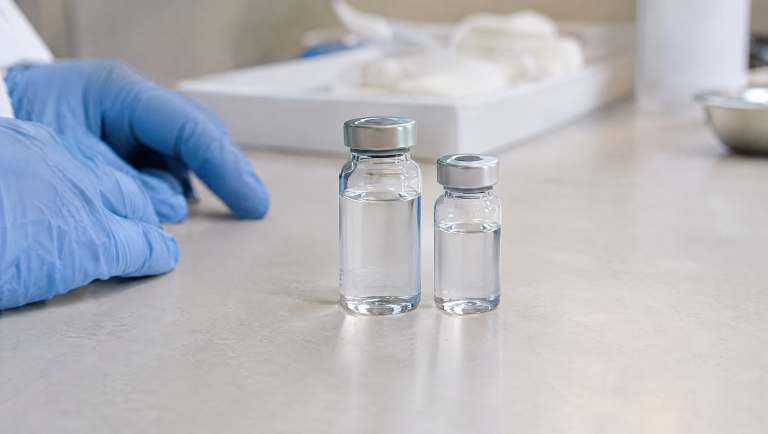
A GLP-1 lowers appetite, but it has no setting that spares muscle. In a SURMOUNT-1 scan study of 160 adults on tirzepatide, about 25 percent of the weight lost was lean mass. That is why federal guidance on strength work at least twice a week is worth raising with your clinician. Lifting may help you keep more lean mass, and it is not a promise. The bathroom scale still gives you one number.
On public one-star pages for large GLP-1 subscription programs, some people write that they did not notice a change. Angry people post. People who felt a clear drop tend not to write. A scale that barely moved, and a scale that dropped while someone felt weaker, both sit in that same gap. The vial arrived. Nobody talked about muscle.
A GLP-1 lowers appetite. Eat less for months and the body uses stored energy, including fat and lean tissue. The pen has no setting that burns fat and leaves muscle alone.
Lean mass on a scan is not the same thing as muscle. Water and other soft tissue sit in that number too.
What the scans showed
A 2025 DXA substudy from SURMOUNT-1 scanned 160 adults. DXA is a body scan that estimates fat and lean tissue. After 72 weeks, people on tirzepatide lost 21.3 percent of starting weight. Fat mass fell 33.9 percent. Lean mass fell 10.9 percent. Of the weight lost, about 75 percent was fat and about 25 percent was lean mass. Placebo showed the same split on a smaller drop. The trial asked for a calorie cut and at least 150 minutes of activity a week. It did not assign a lifting plan.
STEP 1 ran a similar scan group of 140 adults on weekly semaglutide 2.4 mg for 68 weeks. Weight fell 15.0 percent. Fat mass fell 19.3 percent. Lean mass fell 9.7 percent. The share of the body that was lean still rose, because fat fell faster.
Fat fell faster. Lean mass still fell.
Those numbers are averages from trial subsets, not a forecast for your next weigh-in. Some people lose little weight on these drugs. Some lose more lean mass than the mean. How you feel can lag the scale, or the scale can move while strength does not.
Strength training on GLP-1 while you eat less
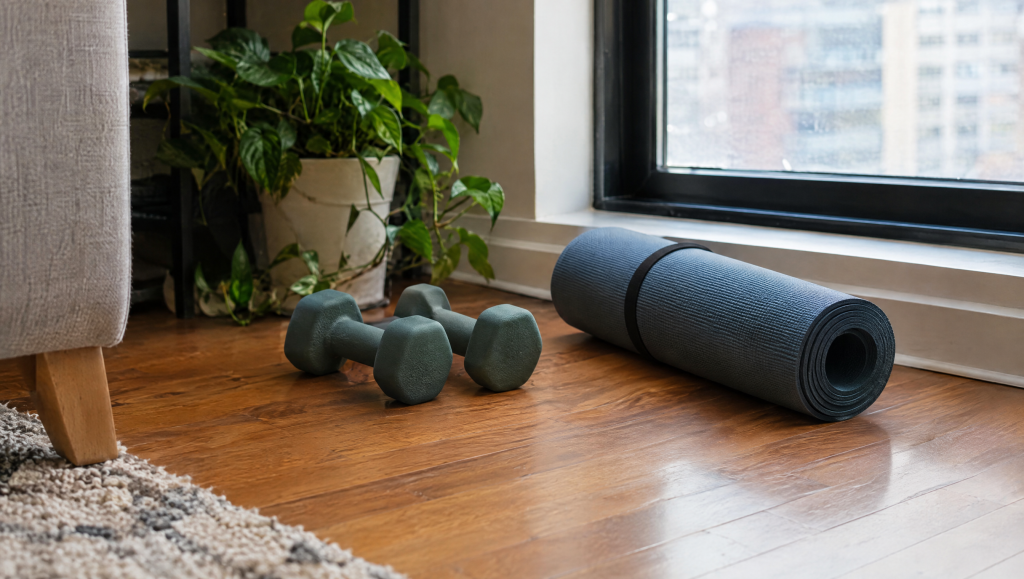
Federal guidance for adult bone health calls for muscle-strengthening work at least twice a week, and at least 150 minutes a week of moderate activity such as brisk walking. Resistance work loads muscle and also loads bone. Two to three short strength sessions in a week is the range many clinicians use during weight loss. Bring that range as a question. Do not treat this page as a program, and do not treat lifting as a promise that lean mass will hold.
A 2017 review of diet-induced weight loss found that higher protein intake helps preserve lean mass. Resistance-type exercise helped preserve mass and could raise strength. Walking and other endurance work helped mass. They did less for strength. Appetite on a GLP-1 often makes protein the part people skip, which is why it belongs in the visit, not as a number copied from a forum.
If the medicine is later cut back, some of the lost weight often returns. After STEP 1, a subset who stopped weekly semaglutide at week 68 had regained a large share of that loss by week 120. Strength you still have is useful on its own. It will not lock the number on the floor.
Older adults and people who eat very little may need a closer watch. Joint pain and other conditions should be named when you talk about lifting. A clinician can say whether it is safe for you, how much protein they want while appetite is low, and what else to track besides a morning weigh-in.
Ask the person who signed the prescription before you add load, drop protein, or change a dose.
Common questions
Do you lose muscle on a GLP-1?
You can. In a SURMOUNT-1 scan study, lean mass fell 10.9 percent and fat mass fell 33.9 percent after 72 weeks on tirzepatide. Lean mass on a scan also counts water and other soft tissue, so it is not a pure muscle number.
How often should you lift weights on a GLP-1?
Federal guidance for adults calls for muscle-strengthening work at least twice a week. Ask a licensed provider whether that fits you.
Does strength training stop muscle loss on a GLP-1?
It may help, but nobody can promise it. A 2017 review found resistance exercise can limit muscle loss during diet-induced weight loss, and that review was not about GLP-1 medicines. The SURMOUNT-1 trial did not assign a lifting plan, so it cannot answer this.
Does protein matter while appetite is low?
A 2017 review found higher protein intake helps preserve lean mass during weight loss, though it did not improve strength. Low appetite can make protein easy to skip, so ask your provider how much they want you eating.
Sources
- Look M et al. Body composition changes during weight reduction with tirzepatide in the SURMOUNT-1 study. Diabetes Obes Metab. 2025. PMC11965027
- Wilding JPH et al. Impact of semaglutide on body composition in adults with overweight or obesity: exploratory analysis of the STEP 1 study. J Endocr Soc. 2021. PMC8089287
- Cava E, Yeat NC, Mittendorfer B. Preserving healthy muscle during weight loss. Adv Nutr. 2017. PMC5421125
- NIAMS. Exercise for Your Bone Health (HHS adult activity amounts, including muscle-strengthening at least twice a week)
- Wilding JPH et al. Weight regain and cardiometabolic effects after withdrawal of semaglutide: The STEP 1 trial extension. Diabetes Obes Metab. 2022. PMC9542252
See what a Living+ plan costs and whether it fits.