The Justice Department has put telemedicine on its short list. On August 13, Assistant Attorney General Colin M. McDonald issued a priorities memo for the department’s new National Fraud Enforcement Division. Health care fraud sits second on that list, behind only public trust and financial integrity cases and ahead of tax, trade and corporate fraud.
According to a Husch Blackwell analysis of the memo, telemedicine programs are named as a priority target, alongside home health and hospice schemes, controlled substance diversion and what the division calls data-driven enforcement.
What changed this summer
The memo did not arrive alone. On August 4 the department extended its Northeast Health Care Fraud Strike Force to the U.S. Attorney’s Office in Philadelphia, the fourth geographic expansion of the strike force program in under a year. The first Philadelphia case charged 19 defendants over alleged Medicaid home health aide fraud worth more than $4 million.
The division was expected to reach about 500 attorneys and staff by late August, with growth planned for two more years. That is a lot of new capacity, and the memo tells it where to look.
It also follows the 2026 National Health Care Fraud Takedown in June, which trade press reported charged 455 defendants, including 90 doctors and other licensed medical professionals, over more than $6.5 billion in alleged false claims.
Why telehealth keeps showing up
Most of the telemedicine cases prosecutors have brought in recent years follow a familiar shape. A marketing company finds patients. A clinician who never meaningfully examines them signs orders for braces, genetic tests or medications. Someone bills a government program. Law firm commentary on the new priorities flags per-lead and per-order payments to marketers as a specific risk area for telehealth operators.
The legitimate side of the industry has an interest in that enforcement working. Every headline about a sham telehealth scheme makes it harder for real virtual care to keep the trust of patients, payers and lawmakers who are still deciding how permanent telehealth rules should be.
What it means if you use telehealth
For patients, the practical signs of a real telehealth service have not changed:
- A licensed clinician reviews your history before anything is prescribed.
- You can reach that clinician, or the practice, with questions after the visit.
- Nobody pressures you into a product, test or device you did not ask about.
- Your bill matches what you were told, and nobody bills your insurance for things you never received.
If something feels off, the HHS Office of Inspector General takes reports of suspected Medicare and Medicaid fraud online.
For telehealth companies, the message from the memo is simple. Prosecutors are hiring, they are using claims data to find outliers, and telemedicine is named on the page. Clean marketing contracts, real clinical review and documentation that would hold up under scrutiny are no longer optional extras.
We will keep watching how the new division uses its mandate through the rest of the year.
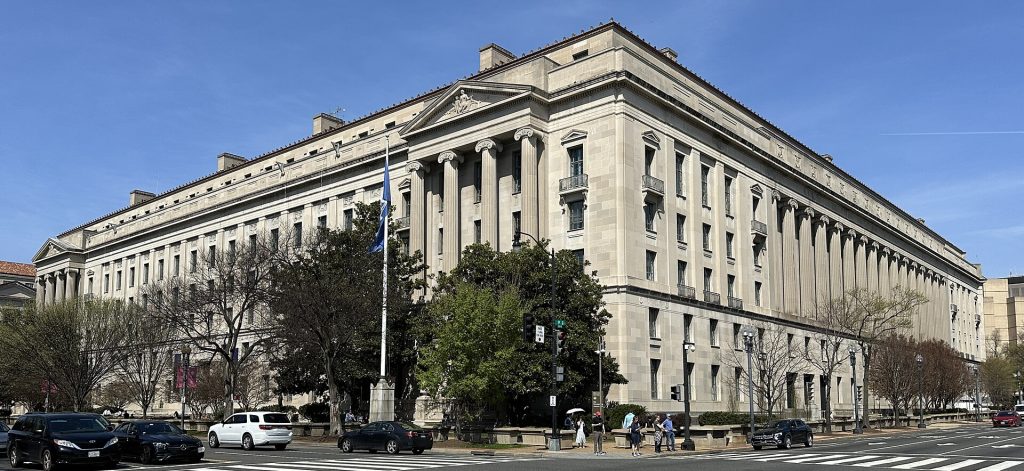
Photo: The Robert F. Kennedy Department of Justice Building in Washington, D.C.. APK via Wikimedia Commons, CC BY 4.0.
Sources
- Husch Blackwell, Government Enforcement Report: DOJ Fraud Division Priorities Memo and Strike Force Expansion (Aug. 31, 2026)
- Frier Levitt: DOJ Healthcare Fraud Enforcement Priorities for 2026
- HME News: DOJ charges 455 in $6.5B fraud takedown
- Polsinelli: What health care organizations should know about the DOJ’s 2026 fraud takedown
- HHS Office of Inspector General: Report fraud
See what a Living+ plan costs and whether it fits.